
how does water activated tape work: 7 Best Tips
how does water activated tape work improves sourcing decisions. how does water activated tape work means water activates the adhesive so the tape bonds into carton fibers for stronger paper-based sealing.
How Does Water Activated Tape Work? The Science & Strategy for Smarter Packaging
What is Water Activated Tape (Gummed Tape)?
Water activated tape (WAT), also known as gummed paper tape, is a high-performance carton sealing tape made from kraft paper coated with a natural, water-based adhesive (typically starch or dextrin). Unlike traditional pressure-sensitive tapes (plastic or acrylic), WAT remains non-sticky until it passes through a moistening system that reactivates the glue. When applied to a corrugated box, the adhesive penetrates the cardboard fibers, forming an inseparable, fiber-tearing bond. This makes it the gold standard for sustainable, tamper-evident, and brand-enhancing packaging.

The Science: How Does Water Activated Tape Work?
Water activated tape relies on rehydrating a dormant adhesive layer. Here’s the step-by-step mechanism that makes it superior for e‑commerce and industrial packaging.
Step 1 – Adhesive in a “sleep” state
The tape’s glue (typically starch or dextrin derived from corn, potatoes, or tapioca) is dry and non-tacky at room temperature. This allows rolls to be stored without sticking.
Step 2 – Water activation (the critical moment)
A dispenser — manual or electric — applies a thin, even film of water to the adhesive side of the tape as it is pulled. Water molecules penetrate the adhesive layer, breaking hydrogen bonds and turning it into a slippery, aggressive tack.
Step 3 – Bonding to the cardboard fiber
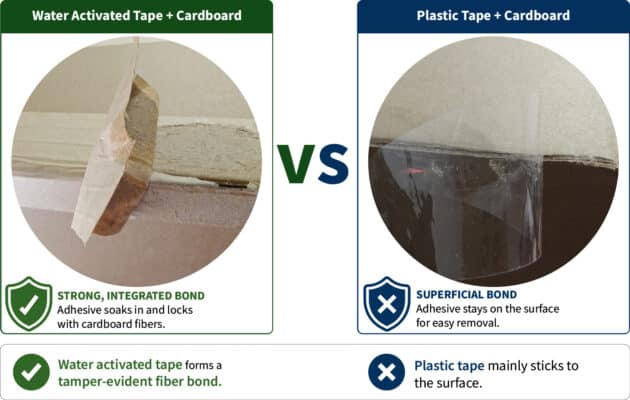
Immediately after wetting, the tape is pressed onto the corrugated box. The water softens the top layer of the cardboard’s cellulose fibers. The adhesive flows into the porous surface, creating mechanical interlocking.
Step 4 – Drying & permanent fusion
As water evaporates (within seconds to minutes), the adhesive re-solidifies and shrinks, pulling the tape and cardboard fibers together. The result is a bond stronger than the box itself — trying to remove it tears the paperboard, leaving clear evidence of tampering.
Reinforced water activated tape adds fiberglass filaments within the kraft paper, providing extra tensile strength for heavy or oversized packages — ideal for industrial applications.
Why WAT Wins: Benefits Across Your Supply Chain
For Sourcing Managers & Operations
✅ Cost per seal efficiency – Less tape needed (no overlapping) thanks to superior adhesion.
✅ Reduced damage claims – Fiber-tearing bonds keep cartons secure, lowering returns.
✅ Compatible with automated lines – Electric dispensers integrate into high-volume packing stations.
For Retailers & E‑commerce
✅ Tamper-evident security – Any attempt to peel destroys the box, reassuring customers.
✅ Eco-friendly branding – 100% recyclable with the shipping box (plastic tape contaminates recycling streams).
✅ Premium unboxing – Clean, professional kraft finish that aligns with sustainable promises.
For Designers & Brand Buyers
✅ Custom printable surface – High-resolution flexo or digital printing; logos, patterns, or brand colors.
✅ Natural aesthetics – Kraft, white, or colored papers that elevate packaging design.
✅ Reinforced & decorative options – Combine strength with visual storytelling.
Result: Water activated tape isn’t just a closure — it’s a silent brand ambassador that communicates quality, sustainability, and care.
Water Activated Tape vs. Plastic Tape vs. Pressure Sensitive Tape
💪 Bond strength✅ Becomes part of the corrugated board⚠️ Surface bond only, fails with dust/moisture⚠️ Adhesive degrades over time (yellowing)
| Feature | Water Activated Tape (WAT) | Plastic / Polypropylene Tape | Hot Melt / Acrylic PSA |
|---|---|---|---|
| 🌱 Eco-friendly & recyclable | ✅ Yes – recyclable with cardboard, no plastic waste | ❌ Non-recyclable; contaminates paper streams | ❌ Non-recyclable (mixed materials) |
| 🔒 Tamper evidence | ✅ Fiber-tearing bond – impossible to remove intact | ❌ Can be peeled & resealed | ❌ Can be slit or peeled |
| 🖨️ Printability / branding | ✅ Excellent – custom logos, high-resolution print | ⚠️ Limited, often requires lamination | ⚠️ Moderate, but can crack |
| 🧾 Dispenser required | ✅ Manual or electric moistener | ❌ Standard hand dispenser / gun | ❌ Standard dispenser |
| 💰 Cost per seal (volume) | ✅ Competitive – less tape, fewer claims | ⚠️ Low upfront, higher waste cost | ⚠️ Moderate |
For sourcing managers: WAT reduces total cost of ownership via lower damage rates and positive sustainability metrics.
How to Choose the Right Water Activated Tape (For Your Boxes & Brand)
1. Weight & reinforcement
Light-duty (e.g., e‑commerce apparel) → standard 50–60 gsm kraft tape. Heavy/bulky items → reinforced water activated tape with fiberglass filaments for extra tear resistance.
2. Custom printing & colors
Work with a manufacturer to create bespoke water activated tape featuring logos, QR codes, or seasonal designs. Minimum order quantities vary, but the ROI in brand recall is proven.
3. Dispenser compatibility
Manual handheld units for low-volume packing, electric or tabletop dispensers for high-throughput warehouses. Ensure the tape width (2″, 3″, 4″) matches your dispenser.
4. Sustainability credentials
Look for FSC-certified kraft paper and water-based, non-toxic adhesives. This appeals to eco-conscious buyers and meets new plastic reduction regulations (EU PPWR, US state laws).
Frequently Asked Questions — Water Activated Tape
Is water activated tape recyclable & compostable?
Yes. Since water activated tape is made from kraft paper and starch-based adhesive, it is fully recyclable along with corrugated cardboard. Most recycling mills accept it without issue. It is also home-compostable in many cases (check with your supplier for certified compostability). Plastic tape, by contrast, must be removed and contaminates paper recycling.
Do I need a special dispenser to use water activated tape?
Absolutely. Water activated tape requires a dispenser that wets the adhesive before application. Manual hand dispensers (with a water reservoir and brush) work for low to medium volume. For high-speed warehouses, electric or automated WAT dispensers provide consistent water application, cutting and feeding the tape automatically. Standard plastic tape dispensers cannot activate the glue.
Can I print my custom brand logo on water activated tape?
Yes — that’s a major advantage for retailers and brand buyers. Water activated tape is available with custom flexographic printing (up to 6 colors) or digital printing for short runs. You can feature logos, brand colors, safety messages, or QR codes. The printing bonds into the tape, so it doesn’t crack or fade during shipping.
How does water activated tape perform in cold or humid warehouses?
Water activated tape is tested for various conditions. It performs well in cold environments (freezer-grade options exist). High humidity does not reactivate the tape once dry; the bond remains strong. However, store unused rolls in a dry area to prevent premature activation. For extreme conditions, reinforced WAT provides extra resilience.
Is water activated tape more expensive than standard packing tape?
While the initial cost per roll may be slightly higher, the total cost per sealed carton is often lower because WAT requires less tape (one strip does the job of multiple plastic layers) and dramatically reduces package failures, returns, and theft. Plus, the sustainable brand equity adds value beyond price.
Conclusion: Elevate Your Packaging with Water Activated Tape
Water activated tape is not a niche product — it’s the smart choice for any business that ships goods, from high-volume retailers to boutique brands. By understanding how water activated tape works (the water + starch synergy that creates a permanent fiber bond), sourcing managers, designers, and brand owners can reduce waste, boost security, and craft memorable unboxing experiences. Make the switch to WAT, and let your packaging seal the deal — sustainably.
Ready to upgrade your carton sealing? Contact a certified water activated tape manufacturer to request samples, custom print proofs, and dispenser recommendations tailored to your volume.