
reinforced water activated tape construction: 7 Best B2B Checks
reinforced water activated tape construction should be evaluated by kraft paper grade, fiberglass yarn pattern, adhesive activation, roll width, carton weight, export handling, and case sealing speed.
reinforced water activated tape construction improves sourcing decisions. reinforced water activated tape construction helps buyers compare paper, reinforcement, adhesive, roll width, and carton sealing strength.
What is Reinforced Water-Activated Tape Construction? A Guide for Sourcing Heavy-Duty Packaging
The 5-Ply Sandwich: Deconstructing the Layers
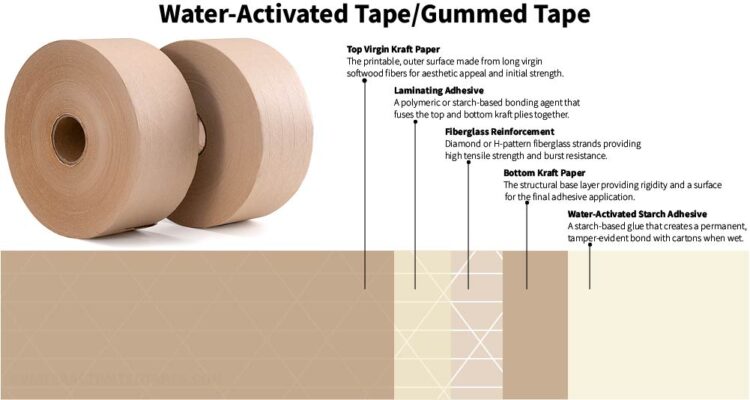
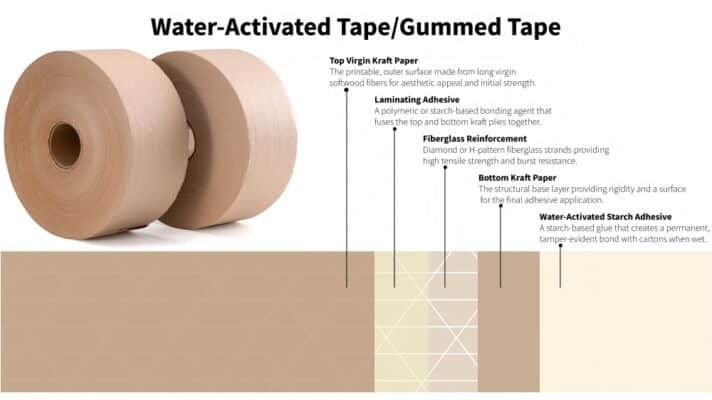
Unlike non-reinforced tape, which is a single ply of paper, Reinforced WAT is a composite material. It is effectively a “sandwich” constructed of five distinct elements working together.
1. The Top Sheet (Virgin Kraft Paper)
The visible face of the tape. We typically use a lighter basis weight Kraft paper here compared to non-reinforced tape, because the strength comes from the laminate structure. This layer handles the print (branding, handling instructions) and provides the first barrier against abrasion.
2. The Laminate Adhesive
This is the invisible hero. A layer of hot-melt or polymer-based adhesive is applied to bond the top sheet to the bottom sheet. Its primary job is to lock the fiberglass reinforcement in place so it doesn’t shift during the taping process.
3. The Muscle: Fiberglass Scrim (The Reinforcement)
Embedded in the laminate adhesive are strands of fiberglass yarn. This is the “rebar” of the tape.
- Machine Direction (MD) Yarns: Run the length of the tape to prevent it from snapping under tension.
- Cross Machine Direction (CD) Yarns: Run diagonally or horizontally to prevent the tape from splitting width-wise.
4. The Bottom Sheet (Kraft Paper)
A second sheet of Kraft paper seals the sandwich. This provides a smooth surface for the final adhesive layer to coat onto.
5. The Anchor: Water-Activated Starch Adhesive
The final bottom coating is the chemically active plant-based starch. When wetted, this adhesive penetrates the corrugated box fibers, welding the “sandwich” to the carton permanently.
Understanding Scrim Patterns
Not all reinforced tapes are created equal. As a manufacturer, we weave the fiberglass in specific patterns to achieve different tensile strengths.
The Diamond Pattern (3-Way Reinforcement)
This is the most common industry standard. It features vertical yarns and diagonal yarns crossing to form a diamond shape. It offers balanced strength against both splitting and snapping.
The Linear Pattern (2-Way Reinforcement)
Primarily features long strands running the length of the tape. This provides exceptional hold for heavy boxes that might “pop” open, but it is slightly easier to tear sideways by accident.
Why Sourcing Managers Specify Reinforced WAT
1. Extreme Weight Capacity
While non-reinforced tape caps out around 15 lbs, Reinforced WAT can secure cartons weighing upwards of 50 to 75+ lbs depending on the grade (Economy, Standard, or Heavy Duty). The fiberglass prevents the box flaps from bursting open under pressure.
2. Theft Deterrence
This is a major selling point for high-value retail. You cannot cut reinforced tape silently. The fiberglass strands resist knife blades, requiring force to cut, and you certainly cannot tear it by hand. This makes “pilfering” (sneaking an item out of a box) nearly impossible without leaving obvious evidence.
3. Weather Resistance
The multi-layered laminate construction makes reinforced tape more resistant to humidity and temperature fluctuations than single-ply paper tapes.
Comparison: Reinforced vs. Non-Reinforced
When filling out your packaging spec sheet, use this guide:
| Specification | Reinforced WAT | Non-Reinforced WAT |
|---|---|---|
| Structure | Multi-ply Laminate (Paper/Glass/Paper) | Single Ply (Paper) |
| Reinforcement | Fiberglass / Polyester Yarns | None |
| Recyclability | Recyclable (Fiberglass screened out) | 100% biodegradable |
| Tearability | Impossible by hand (Requires Cutter) | Easy hand tear |
| Best For | Heavy cartons (>20lbs), Security | Light cartons (<15lbs), Sustainability focus |
Frequently Asked Questions
Is Reinforced Water-Activated Tape recyclable?
Yes, it is generally accepted in curbside recycling. During the pulping process at the mill, the paper fibers are separated for reuse, and the fiberglass strands are screened out and discarded as waste. It is not “repulpable” in the same 100% biodegradeable sense as non-reinforced, but it does not ruin the recycling stream like plastic tape can.
What is the difference between “Economy” and “Heavy Duty” grades?
The difference lies in the basis weight of the paper and the density of the fiberglass weave. Heavy-duty grades use thicker paper and more fiberglass strands per square inch to hold heavier loads.
Can you print on Reinforced WAT?
Yes. However, because the tape has a fiberglass mesh inside, the surface has a slight texture (a cross-hatch pattern). Fine print details may not be as sharp as they are on non-reinforced tape, so we recommend bold logos and text.
Related reinforced water activated tape resources
For a complete sourcing plan, compare this reinforced water activated tape construction guide with what is water activated tape, reinforced vs non-reinforced water activated tape, water activated tape benefits, water activated tape price, and request a quote.
Reinforced Water Activated Tape Construction Buying Checklist
reinforced water activated tape construction is important because heavy export cartons need more than surface adhesion. A reinforced tape normally combines kraft paper, a water activated starch adhesive, and fiberglass or synthetic yarn reinforcement. This structure helps the tape lock into corrugated fibers and resist splitting during warehousing, pallet movement, long-distance transport, and rough handling.
For B2B sourcing, reinforced water activated tape construction should be checked by paper basis weight, yarn pattern, adhesive coat weight, roll width, roll length, carton weight, and dispenser compatibility. Buyers should ask suppliers whether the tape is designed for single-strip sealing, H-sealing, heavy-duty export cartons, or high-speed case sealing lines.
Another key factor in reinforced water activated tape construction is the reinforcement pattern. Diamond-pattern reinforcement is commonly used when the carton needs balanced strength in multiple directions. Parallel reinforcement can be useful for long straight seals where tensile strength is the main requirement. For heavy cartons, the best choice depends on carton burst strength, package weight, stacking pressure, and the expected shipping route.
When comparing reinforced water activated tape construction with plastic packing tape, consider both sealing performance and recycling workflow. Paper-based water activated tape can support carton recycling more easily than plastic tape when the buyer chooses suitable kraft paper and adhesive specifications.
External packaging references
For broader packaging and recycling context, review the EPA recycling basics and benefits and the Forest Stewardship Council. These external resources help buyers understand sustainable packaging claims, paper sourcing, and recycling considerations.
Related internal guides
Continue comparing options with what is water activated tape, reinforced vs non-reinforced water activated tape, water activated tape benefits, water activated tape price guide, and request a quote.